ServicesWater Filtration
Whole Home Water Filtration in Manchester
Hard water, a chlorine smell or rusty stains all have a cause. We test your water at the tap, show you what we found and recommend only the equipment that fixes it. One system at the main line treats every faucet in your home.
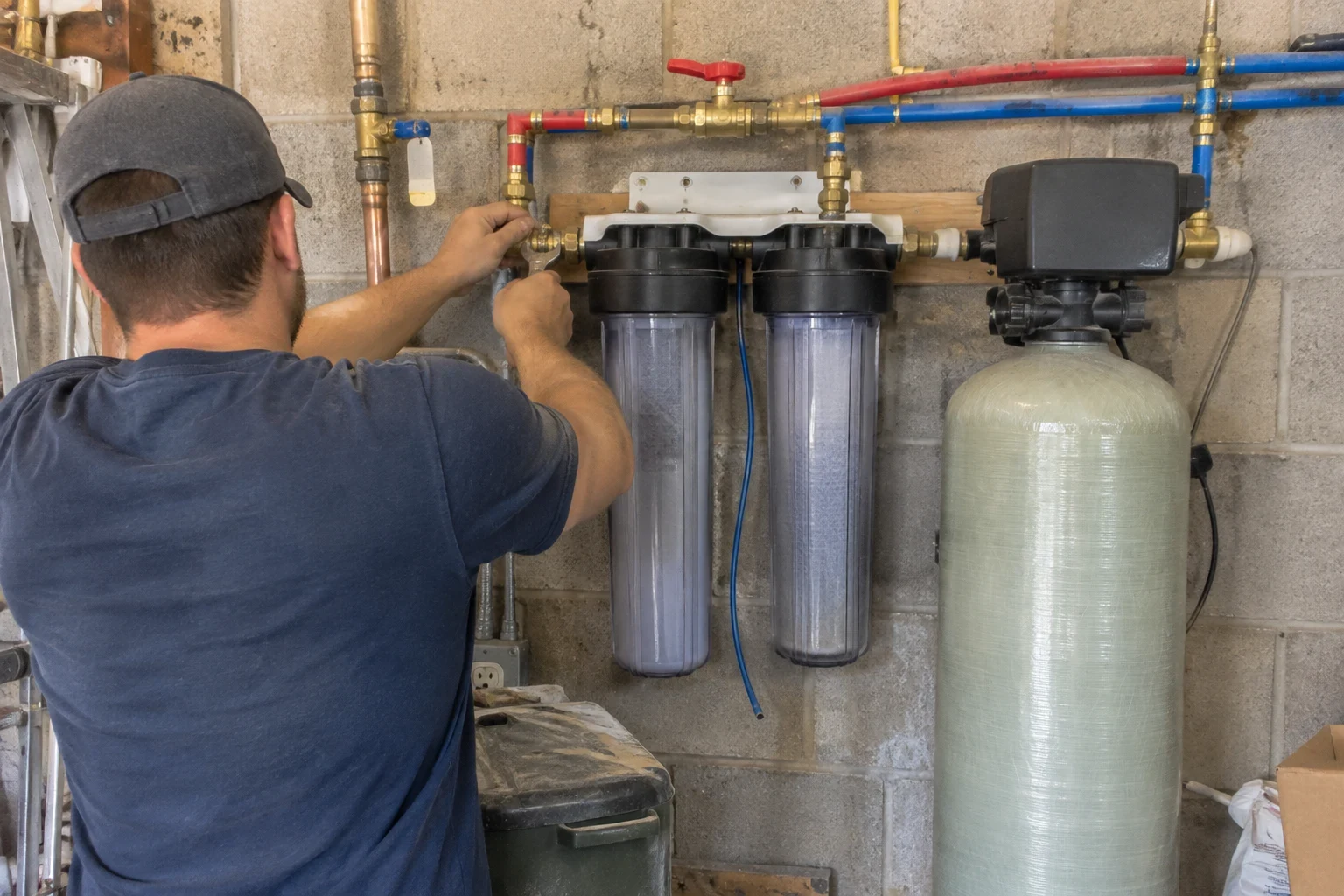
One System for All the Water in Your House
A whole home unit goes in right where your water line comes into the house. Most of the time that's the garage, a utility room or the crawlspace. From that point on, every drop is treated, so your showers, washing machine, water heater and fridge all get the same clean water.
We test before we recommend anything. Much of Middle Tennessee sits on limestone, so hard water shows up a lot. But iron, sediment, sulfur and chlorine taste each call for different equipment. Knowing what's actually in your water keeps you from buying a system built for somebody else's problem.
Sometimes the test comes back clean. When it does, we say so and leave it there.
What the Job Includes
On-site water test
We check hardness, iron, pH, chlorine and sediment at your tap. You see the readings as we take them.
Plain findings
We explain what each number means for your pipes, fixtures and appliances. Then we lay out your options, including doing nothing.
Sizing to your home
We count bathrooms and look at your peak water use. An undersized filter drops your pressure when two showers run at once.
Installation at the main line
We cut in after your main shutoff and add a bypass valve, so you can keep water running during filter changes or service.
Drain and power hookups
Softeners and backwashing filters need a drain line. UV units need an outlet. We plan for both before the install day.
Startup and retest
We flush the system, check for drips at every joint and test the water again so you can compare before and after.
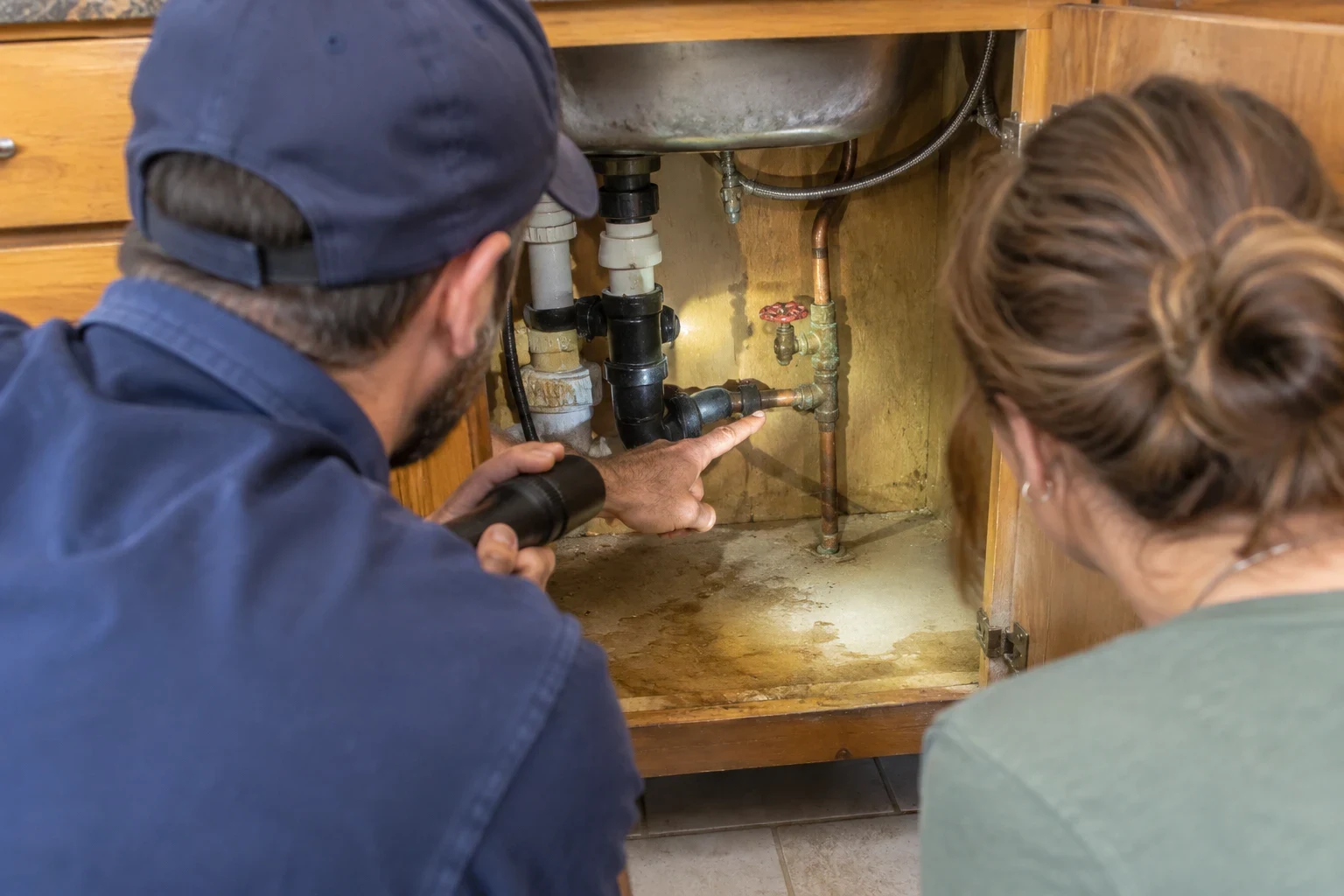
Signs Your Water Needs Filtering
- White crust on fixtures
- Chalky scale on faucets and shower heads is a sign of hard water. That scale also builds up in the bottom of your water heater, where you can't see it, and wears the tank out sooner.
- Orange or brown stains
- Rust-colored rings in toilets and sinks usually mean iron. It will stain your laundry too.
- Rotten egg smell
- A sulfur smell, often stronger from the hot side, comes from hydrogen sulfide. We see it most with well water.
- Chlorine taste
- Cities add chlorine to keep water safe on the way to you. A carbon filter at your home takes out the taste and smell after it has done that job.
- Grit in aerators
- Sand or sediment plugging faucet screens and appliance valves means particles are getting through the line.
How It Goes, Start to Finish
- 1
You call us
Tell us what you're seeing or tasting, and if your water comes from a well or the city. We pick a time to come out.
- 2
We test and look
We test the water, locate your main line and check the spot where a system would fit. That visit usually runs under an hour.
- 3
You get our findings
We go over the results with you and hand you a written estimate. Take your time deciding.
- 4
Install day
We shut off the water, mount the tanks or housings, make the connections and add the bypass. Most installs take part of a day, and your water is only off for a piece of that.
- 5
Flush, retest, clean up
We run the system, test your water again and show you how the bypass works and how to change filters. We haul off the boxes and leave the area clean.
What Moves the Price
Cost depends mostly on what's in your water and how much of it your home uses. A simple sediment and carbon setup costs far less than a softener paired with iron removal. Your estimate is free and lists each part and the labor on its own line.
- What the test finds
- One problem means one stage of treatment. Hardness plus iron plus sulfur can mean two or three units.
- Size of your home
- More bathrooms means higher flow, which calls for larger tanks or bigger housings.
- Install location
- An open garage wall is quick. A tight crawlspace or a long run to the nearest drain adds time.
- Ongoing upkeep
- Cartridges, salt and media all need replacing over time. We tell you what to expect each year before you buy, not after.
Water Filtration Questions
- I'm on city water. Do I still need a filter?
- Maybe not. City water is treated and tested before it reaches you, but it can still be hard and taste of chlorine. Our test shows if a filter would make a real difference in your home or just cost you money.
- Will a whole home filter lower my water pressure?
- It shouldn't if it's the right size. When people lose pressure after an install, the cause is usually a unit too small for the house or a cartridge left in too long. We size the system for the busiest time of day in your home, like two showers and the washer running together.
- What's the difference between a softener and a filter?
- They do two separate jobs. Softening trades out the calcium and magnesium that leave white scale on fixtures and inside your water heater. Filtering traps other things, like sediment, iron or the chlorine taste. Your test results tell us if your home needs one of them, the other, or a pair working together.
- How often do filters need changing?
- Sediment and carbon cartridges usually last a few months up to a year, depending on your water and how much you use. Softeners need salt topped off on a regular basis. We show you how to handle both yourself.
- Can I spread out the cost?
- Yes. We offer financing options, and we take all major credit cards and cash. We can walk through the details when you call.
Find Out What's in Your Water
We'll test it, show you the results and give you a straight answer on whether filtration is worth it. Estimates are free.